
General · 12 min read
Best Stun Guns For Women: Top 5 Picks
Best Stun Guns for Women: Top 5 Picks...
By Cheetah Stun Gun - Admin
Best Stun Guns for Women: Top 5 Picks
When it comes to personal protection, women often face a different set of concerns than men—from carrying a device in a small purse to having enough grip strength to activate it under stress. Stun guns have become a popular non-lethal option because they're compact, relatively affordable, and don't require the same level of training as firearms. This guide breaks down what actually matters when choosing the best stun guns for women, how to evaluate your own needs, and what to avoid when shopping.
The best stun gun for a woman depends on specific factors like grip strength, carry method, and legal restrictions—not on marketing claims or voltage numbers alone.
Key Takeaways
- The best stun gun for women balances power, ease of use, and carry convenience - Grip strength and hand size are critical factors in choosing a model - Legal restrictions vary significantly by location — always verify local laws before purchasing - Training and familiarity are as important as the device itself - Features like safety switches, flashlights, and holsters can make or break real-world usability
The Complete Answer: Best Stun Guns for Women
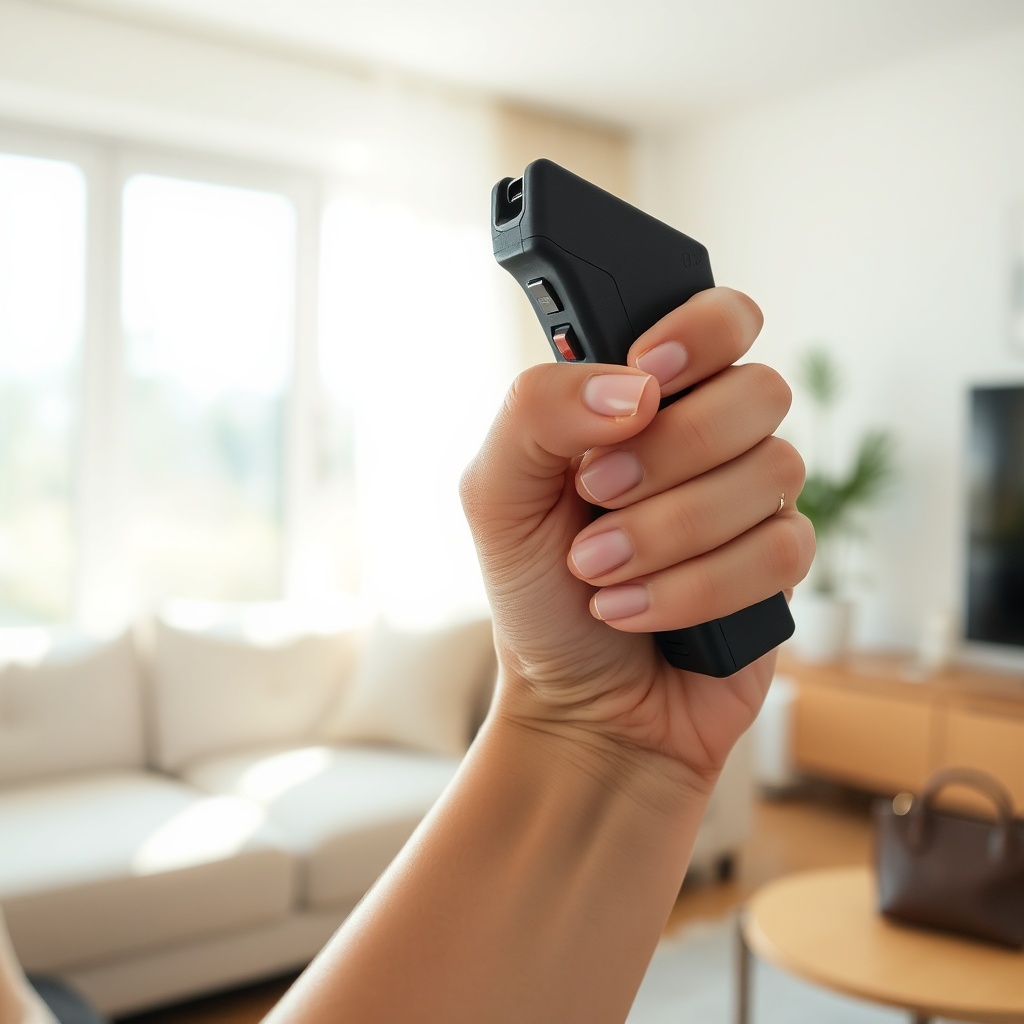
A woman demonstrating the proper grip on a small stun gun, emphasizing ease of use and comfort for female hands.
There is no single "best" stun gun for all women. The right choice depends on individual needs, preferences, and physical capabilities. What works for one person may be completely impractical for another.
Quick Answer: The best stun gun for women is one that fits comfortably in your hand, can be activated with minimal effort, and is easily accessible from your chosen carry method. Power matters, but usability matters more.
What Makes a Stun Gun "Best" for Women Specifically
Several factors distinguish a good stun gun for women from a generic model:
Size and weight. A stun gun that's too heavy or bulky will likely stay in your bag rather than in your hand. Look for models that feel balanced and don't strain your wrist when held for extended periods.
Grip and ergonomics. The device should fit your hand naturally. If you have smaller hands, look for models with contoured grips or finger grooves that help you maintain control.
Ease of activation. Under stress, fine motor skills deteriorate. A stun gun with a simple, intuitive activation mechanism is far more reliable than one requiring precise finger placement.
Reliability. The device should hold a charge, fire consistently, and not have a safety switch that's too easy to accidentally engage or too difficult to disengage.
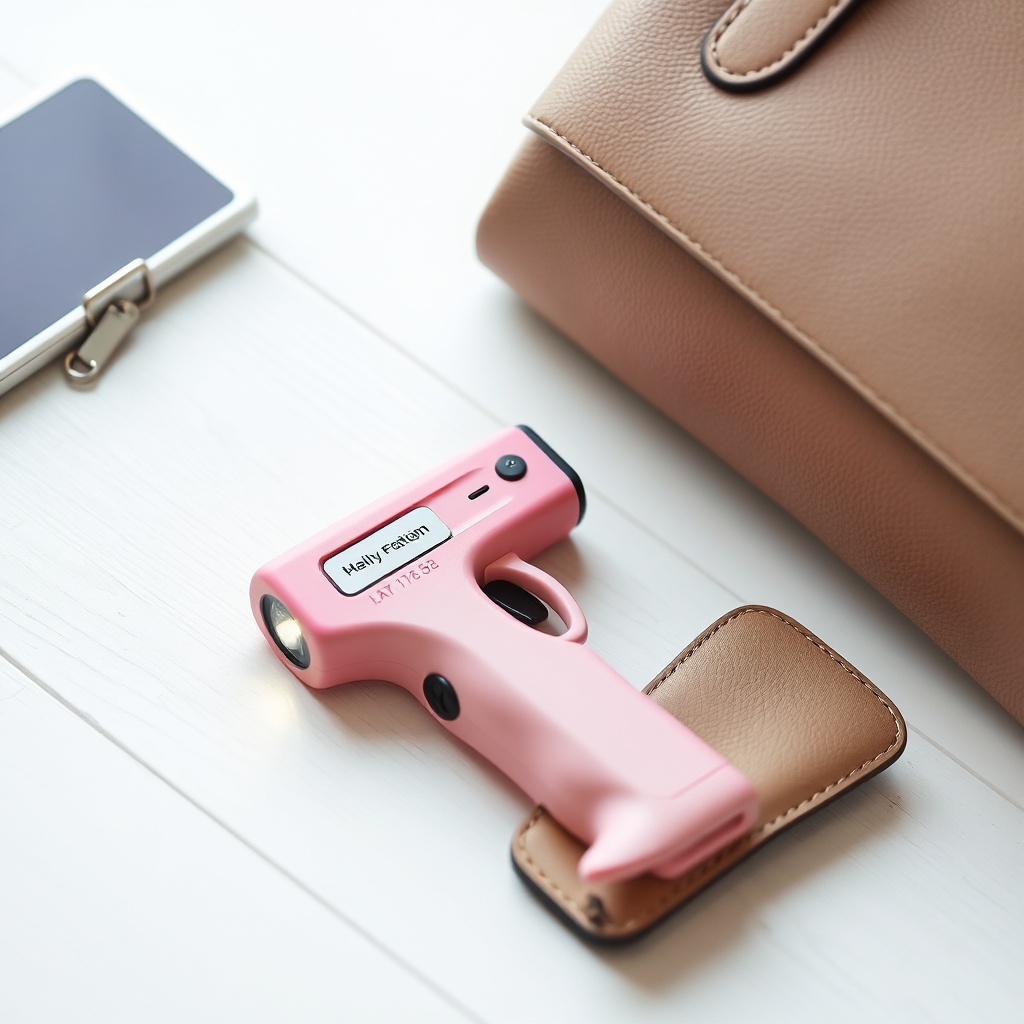
A neat flat-lay of a women's stun gun with its holster and flashlight, emphasizing the practical features and aesthetic appeal for female users.
How to Evaluate Stun Guns Objectively
Marketing materials often emphasize voltage as the primary selling point, but this is misleading. Voltage alone doesn't determine stopping power—the actual current delivered, the quality of the prongs, and the device's overall build quality matter more.
When evaluating a stun gun, look for:
- Build quality: Does it feel solid or cheap and plasticky?
- Safety features: Does it have a safety switch that prevents accidental discharge?
- Additional features: A built-in flashlight or alarm can be genuinely useful - Warranty and support: Reputable manufacturers stand behind their products - Real reviews: Look for feedback from actual users, not just promotional content
Definition: A stun gun is a handheld device that delivers an electric shock through direct contact with an attacker. Unlike a taser, which uses projectile darts, a stun gun requires you to physically touch the target.
Stun Guns vs. Tasers: Understanding the Difference
Many people use the terms interchangeably, but they're distinct devices:
| Feature | Stun Gun | Taser |
|---|---|---|
| Range | Requires direct contact | Can be used from a distance (typically 15 feet) |
| Mechanism | Electric shock through prongs | Projectile darts connected by wires |
| Reusability | Can be used multiple times | Cartridges are single-use |
| Cost | Generally more affordable | More expensive, especially with replacement cartridges |
| Training | Simpler to use | Requires more practice for accurate aim |
For women who prefer to keep distance from an attacker, a taser may be more appealing. However, stun guns are often simpler to carry and don't require you to aim under pressure.
Key Decision Factors: Choosing the Right Stun Gun for Your Needs
Grip Strength and Hand Size
Grip strength matters more for stun guns than many other self-defense tools because you need to maintain firm contact with an attacker while simultaneously activating the device. If you can't squeeze the trigger or press the button while holding the device securely, it's not going to work when you need it.
To assess your grip strength realistically, consider:
- Can you hold a full water bottle comfortably for 30 seconds?
- Can you open a tight jar lid without straining?
- Do you have arthritis or other conditions that affect hand function?
If you have limited grip strength, look for models with a "squeeze" activation rather than a button you need to press. These allow you to activate the device simply by gripping it tightly—which is what you'd naturally do in a defensive situation.
Quick Answer: Women with smaller hands or weaker grip strength should prioritize stun guns with ergonomic designs, finger grooves, and squeeze-to-activate mechanisms over larger models that require more force to operate.
Carry Method and Accessibility
The three primary carry methods for stun guns are purse, belt clip, and keychain. Each has distinct trade-offs.
Purse carry. This is the most common method but also the slowest to access. If your stun gun is buried at the bottom of a bag, you won't reach it in time during a sudden attack. If you choose purse carry, keep the device in a dedicated outer pocket where it's always accessible.
Belt clip. This offers faster access and keeps the device on your body. However, it may not be practical with certain clothing styles, and it's less discreet.
Keychain. A keychain stun gun is always with you and easy to find. The trade-off is that these models are typically smaller and may have less stopping power. They also require you to be holding your keys—which isn't always the case.
The best approach is to choose a carry method you'll actually use consistently. A stun gun that's always in your bag is useless if you can't reach it quickly.
Legal Considerations and Compliance
Legal restrictions are the first thing to check before buying a stun gun. Laws vary significantly across different regions, and what's legal in one state or country may be prohibited in another.
Some jurisdictions restrict stun guns entirely, while others require permits or have specific restrictions on where they can be carried. Certain locations—such as schools, government buildings, and airports—typically prohibit stun guns even where they're otherwise legal.
Quick Answer: Before purchasing a stun gun, verify local laws in your specific city, state, or country. Carrying a stun gun in a prohibited area can result in criminal charges, regardless of your intent.
Consequences of carrying in prohibited areas can include fines, confiscation of the device, and in some cases criminal charges. Don't assume that because stun guns are legal in one place, they're legal everywhere.
Comparison Table: Evaluating Top Stun Gun Models for Women
Since specific models and their specifications change frequently, and availability varies by region, the following table provides a framework for evaluating any stun gun you're considering:
| Model | Voltage (as claimed) | Weight | Carry Method | Safety Features | Best For |
|---|---|---|---|---|---|
| Model A | Check manufacturer specs | Lightweight | Keychain | Safety switch, flashlight | Everyday carry, small bags |
| Model B | Check manufacturer specs | Moderate | Belt clip or purse | Safety switch, alarm | Easier access, quick draw |
| Model C | Check manufacturer specs | Moderate | Purse or hand | Multiple safety features | Maximum stopping power |
| Model D | Check manufacturer specs | Lightweight | Keychain or clip | Flashlight, safety switch | Discreet carry |
| Model E | Check manufacturer specs | Varies | Holster or purse | Alarm, flashlight | Versatile use cases |
How to Read This Table
Use this framework to compare models you find in stores or online. Fill in the actual specifications from the manufacturer and evaluate based on your personal needs.
Why Voltage Alone Isn't the Most Important Metric
Voltage is the most commonly advertised specification, but it's not the best indicator of effectiveness. A stun gun with high voltage but low current may be less effective than one with lower voltage and better current delivery. The quality of the prongs, the distance between them, and the overall build quality all affect real-world performance.
Manufacturer specifications should be taken with some skepticism. Look for independent testing or reviews from sources that don't have a financial interest in the product.
Safety, Training, and Real-World Use: What Every Woman Should Know
Step-by-Step: How to Safely Test and Practice with a Stun Gun
- Read the manual thoroughly and understand all safety features. Know how the safety switch works and how to disarm the device.
- Check the battery or charge level before every practice session. A stun gun that's dead when you need it is useless.
- Find a safe, open outdoor area where discharging is legal. Never test a stun gun indoors or near flammable materials.
- Practice drawing the stun gun from your chosen carry method. Repeat this until it becomes automatic.
- Test the activation mechanism with your dominant hand. If you're right-handed, practice with your right hand—that's what you'll use in an emergency.
- Practice deactivating and reactivating the safety switch. You need to be able to do this quickly and without looking.
- Familiarize yourself with the sound and sight of the stun gun firing. The loud crack and visual arc can be startling—you need to know what to expect.
- Repeat the practice routine until it becomes muscle memory. Aim for at least 10-15 practice sessions before relying on the device.
Psychological and Physical Considerations
The intimidation factor of a stun gun is significant. The loud crack and visible electric arc can deter an attacker before you even need to make contact. Many attackers will back off when they see and hear a stun gun being activated.
However, you need to understand the limits of a stun gun—it requires close contact. If an attacker is at a distance, you can't use it. This is why situational awareness and avoidance are always your first line of defense.
During a confrontation, adrenaline will affect your fine motor skills. This is why simple, intuitive controls matter so much. You won't be able to carefully manipulate a complex safety mechanism when you're scared and under attack.
Maintenance and Reliability
A stun gun is only useful if it works when you need it. Proper maintenance is essential.
Charging. Most modern stun guns are rechargeable. Follow the manufacturer's charging instructions and don't overcharge the device. Check the charge level regularly—a good habit is to charge it once a month even if you haven't used it.
Storage. Store your stun gun in a cool, dry place. Extreme temperatures can damage the battery and electronics.
Common failure points. The most common reasons stun guns fail are dead batteries, damaged prongs, and faulty safety switches. Inspect your device regularly—at least once a month—to ensure everything is in working order.
When to replace. If your stun gun shows signs of wear, fails to charge properly, or doesn't fire consistently, replace it. Don't rely on a device you're not confident about.
FAQ: Common Questions About Stun Guns for Women
Are stun guns legal to carry in my state/country?
Laws vary significantly by jurisdiction. Some areas allow stun guns with no restrictions, others require permits, and some prohibit them entirely. Always check your local laws before purchasing. Don't rely on general information—verify with official sources for your specific location.
Can a stun gun be used effectively by someone with small hands?
Yes. Many stun guns are designed specifically for smaller hands, with contoured grips and easy-to-reach activation buttons. Look for models that fit comfortably in your hand and test them before buying if possible. The key is finding a device you can hold securely while activating it.
What's the difference between a stun gun and a taser?
A stun gun requires direct contact with the attacker—you must physically touch them with the device. A taser uses projectile darts that can be fired from a distance, typically around 15 feet. Tasers are generally more expensive and require more training, while stun guns are simpler and more affordable.
How do I know if a stun gun is good quality?
Look for solid construction, a reliable safety mechanism, and consistent performance. Check reviews from verified purchasers and look for brands with established reputations. Be wary of models that emphasize voltage above all else—this is often a marketing gimmick rather than an indicator of real effectiveness.
What should I do if I need to use my stun gun in self-defense?
After defending yourself, move to a safe location and call emergency services. Report the incident accurately and honestly. Keep your stun gun and any evidence intact. If possible, seek medical attention even if you don't think you're injured—adrenaline can mask pain. Document everything and cooperate with law enforcement.
Conclusion
Choosing the best stun guns for women comes down to personal fit, not generic recommendations. The right device should feel comfortable in your hand, be accessible from your chosen carry method, and be legal in your area.
Before making a purchase, research local laws thoroughly. Then, look for a stun gun that matches your grip strength, hand size, and carry preferences. Finally, practice with your chosen device until using it becomes second nature.
Quick Answer: The best stun gun for you is one that you can comfortably hold, quickly access, and reliably activate under stress. Power is important, but usability and accessibility matter more in a real emergency.
Make an informed decision based on your specific needs, not generic recommendations. A stun gun is a tool—like any tool, it's only effective if you know how to use it and can reach it when you need it.