
General · 12 min read
Stun Gun Vs Pepper Spray: Which To Choose?
Choosing between a stun gun vs <a href="https://cheetahstunguns.com/2023/10/16/stun-guns-vs-pepper-spray-choosing-the-right-self-defense-tool/">pepper</a> spray is one of the most common decisions new...
By Cheetah Stun Gun - Admin
Choosing between a stun gun vs pepper spray is one of the most common decisions new self-defense buyers face. The right choice isn't about which tool is "better" in a vacuum—it depends on your specific threat environment, physical abilities, and legal restrictions. This guide breaks down the mechanics, safety risks, and practical carry considerations so you can make an informed decision.
Key Takeaways
- No One-Size-Fits-All Winner: The best choice depends on whether you face a physical or biological threat, your dexterity, and your local laws.
- Stun Guns Require Contact: A stun gun only works when you can physically press it against the attacker's body, which requires proximity and strength.
- Pepper Spray Works at a Distance: It can be deployed from several feet away, creating a safe buffer zone, but is susceptible to wind and enclosed spaces.
- Legal Restrictions Vary: What is legal in your state or country can differ drastically between the two devices.
- Training is Non-Negotiable: Neither tool is a "magic wand"; both require practice to deploy under stress.
The Complete Answer: Stun Gun vs. Pepper Spray — Which One Should You Choose?
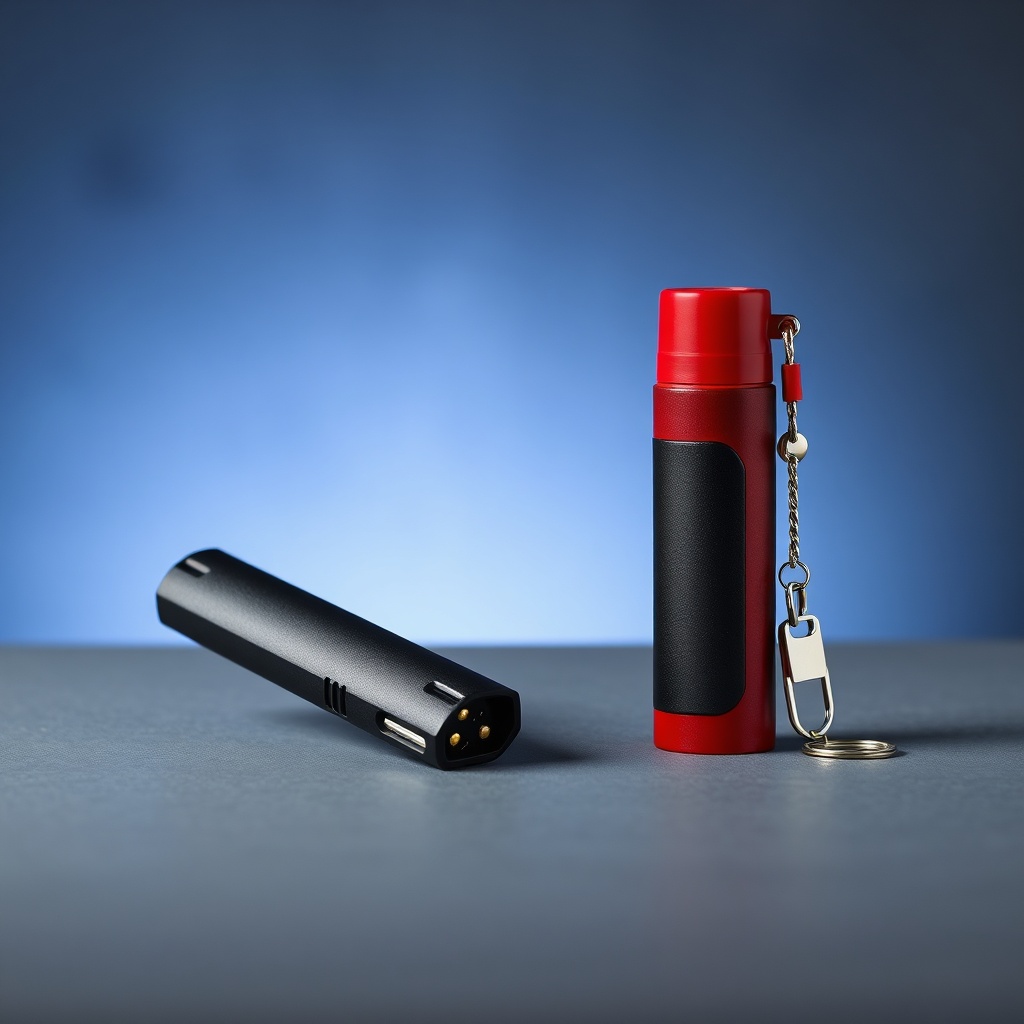
A clear product shot contrasting a stun gun and pepper spray, ideal for illustrating the main choice in self-defense.
The Definitive Verdict
Choose a stun gun for close-quarters defense and a pepper spray for distance defense. If you have limited strength or mobility, pepper spray is generally the more practical option.
The decision comes down to the threat you anticipate. If you're concerned about an attacker grabbing you or closing the distance quickly, a stun gun gives you a tool that works at contact range. If you're concerned about an attacker approaching from a distance, pepper spray lets you stop them before they get close.
Quick Answer: A stun gun requires direct contact to work, while pepper spray can be deployed from several feet away. Choose pepper spray for distance and stun guns for close-quarters situations.
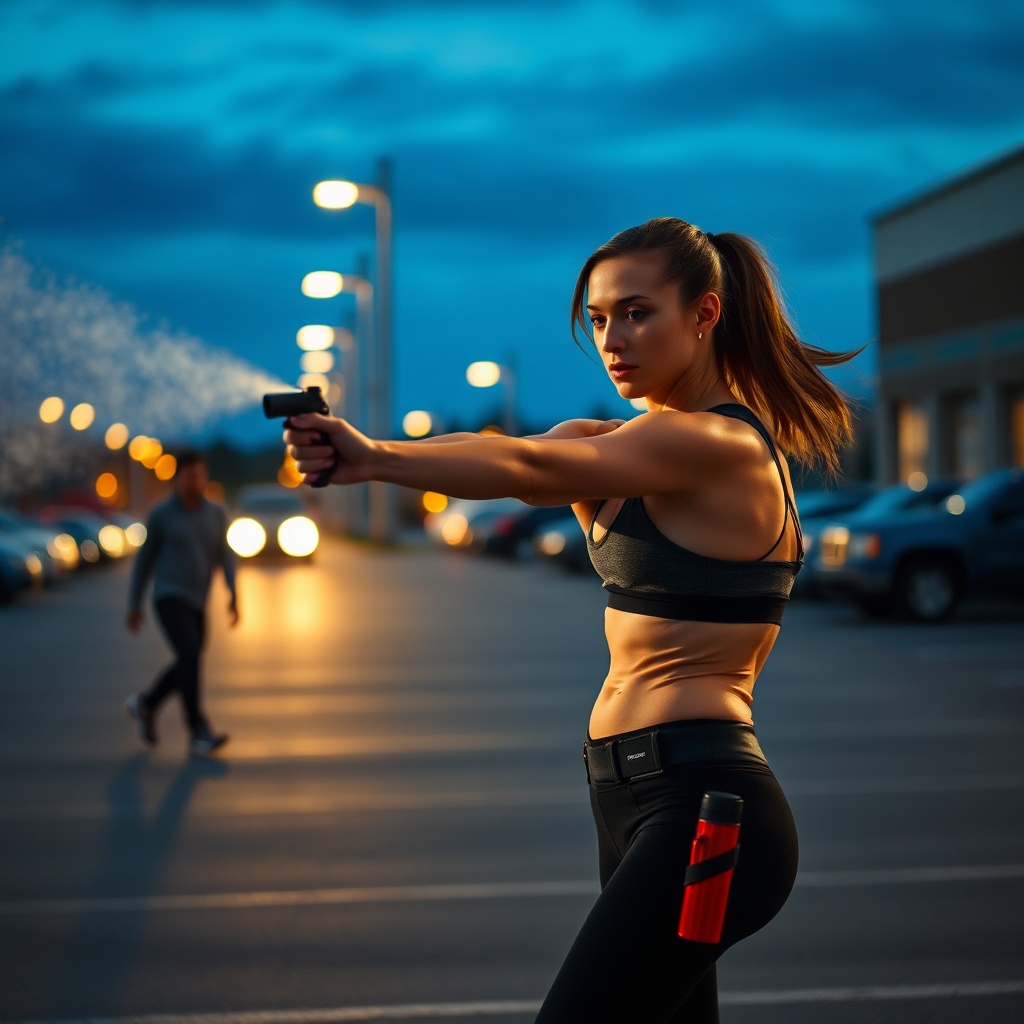
An action shot showing the practical use of pepper spray at a distance, with a stun gun as a backup, illustrating the key difference in deployment range.
The Core Difference: Mechanics of Action
Stun Gun: A stun gun delivers an electrical charge that disrupts the body's muscle control. When pressed against an attacker, the current interferes with the nervous system's signals to the muscles, causing involuntary contraction and temporary loss of coordination. This is an electroshock weapon that works through direct contact.
Pepper Spray: Pepper spray is an OC spray (oleoresin capsicum) that acts as an inflammatory agent. When it hits the eyes, nose, and throat, it causes temporary blindness, intense burning, and respiratory distress. These effects are involuntary—the body reacts regardless of the attacker's willpower.
Quick Comparison Table: At-a-Glance
| Feature | Stun Gun | Pepper Spray |
|---|---|---|
| Effective Range | Contact only (must touch the attacker) | 6–10 feet, depending on the stream or gel |
| Required Contact | Yes, direct pressure against the body | No, can be deployed from a distance |
| Primary Target | Muscles and nervous system | Eyes, nose, and respiratory system |
| Wind Susceptibility | Not affected by wind | Highly susceptible to wind blowback |
| Best For | Close-quarters defense, car or hallway scenarios | Creating distance, low-strength users |
| Main Drawback | Requires proximity and a firm grip | Can contaminate the environment and affect bystanders |
Section 1: The "Stopping Power" Myth — Which Actually Stops a Threat Faster?
The Psychology of Pain vs. Incapacitation
A stun gun relies on pain compliance and muscle disruption—the attacker must feel the shock and lose control of their muscles. A pepper spray, on the other hand, triggers involuntary physiological reactions like swelling of the eyes and coughing that are much harder to ignore, even for a determined attacker.
The key difference is that pain is subjective. An individual's pain tolerance varies, and adrenaline can significantly mask pain. Pepper spray targets the senses directly, causing a biological reaction that doesn't depend on how tough the attacker thinks they are.
The "Drunk or High" Factor
A stun gun's electrical signals can still disrupt muscle control even if the attacker is under the influence of alcohol or drugs. The electrical current interferes with the nervous system's communication to the muscles, which is a physical mechanism rather than a psychological one.
Pepper spray may be less effective on individuals with altered mental states. While the physical effects on the eyes and respiratory system still occur, someone who is intoxicated or under the influence of certain substances might not respond to the pain in the same way—or might not even register it fully.
The Reality of Adrenaline and Pain Tolerance
Adrenaline can mask pain, making a stun gun less effective if the attacker is highly motivated or in a state of extreme arousal. A person experiencing a "fight or flight" response might push through the pain of a stun gun shock if they're determined enough.
The solution is to understand that pepper spray targets the senses (biologically) while a stun gun targets the muscles (electrically). Pepper spray forces the eyes to close and the lungs to struggle, which is a reflexive response that's difficult to override. A stun gun causes muscle spasm, but the attacker might be able to override the pain if their adrenaline is high enough.
Section 2: Safety Risks and Collateral Damage — Who Else Is in Danger?
The Wind Problem (Pepper Spray)
The risk of using pepper spray in windy conditions is that the spray can blow back into your face or into innocent bystanders. This can effectively disable you as much as your attacker.
Proper deployment technique helps mitigate this risk—you should aim slightly downwind and use short bursts rather than a continuous stream. Choosing a gel or foam formulation over a traditional liquid stream reduces the chance of airborne contamination, as gels and foams are heavier and less likely to drift.
The Accidental Shock Problem (Stun Gun)
The risk with a stun gun is shocking yourself if the attacker grabs the device or if you fumble it during the draw. Because the electrodes are on the front of the device, a loose grip or a struggle can bring them into contact with your own body.
The mitigation is the safety switch. A stun gun should have a physical safety that prevents accidental discharge, and you need to practice the muscle memory of disengaging it only when you're ready to use it. A firm, deliberate grip is essential to maintain control during a struggle.
The Enclosed Space Dilemma
A stun gun has no airborne risk—it's safe to use in a car, hallway, or elevator without affecting anyone else. The electrical discharge only affects the person it's pressed against.
Pepper spray presents a high risk of contaminating the environment. In an enclosed space, the spray can linger in the air and affect you, your children, or anyone else in the area. The effects can last for minutes in poorly ventilated spaces, making it a poor choice for car or indoor defense.
Section 3: Legal and Regulatory Gray Zones
The "Weapon" Classification
Stun guns are often classified as weapons, and some states require a permit to carry one or prohibit them entirely. The legal landscape for electroshock weapons is complex and varies significantly by jurisdiction.
Pepper spray is often classified as a non-lethal self-defense spray rather than a weapon. Restrictions usually involve age limits and the quantity or concentration of the OC content, but it's generally more accessible than a stun gun.
Specific Jurisdictional Restrictions
Some states and countries have specific bans or restrictions on stun guns. Certain jurisdictions prohibit them entirely, while others require a license or permit. You must check your local laws before purchasing.
Pepper spray restrictions also vary. Some countries have strict limits on the OC concentration or the size of the canister allowed. In some places, pepper spray is entirely prohibited for civilian use.
Quick Answer: Legal restrictions on stun guns and pepper spray vary widely by jurisdiction. Stun guns are more likely to be classified as weapons with stricter regulations, while pepper spray is generally more accessible but still subject to age and quantity limits.
Travel and Transport Implications
Stun guns are prohibited on airplanes and in many secure facilities like courthouses, schools, and government buildings. You cannot carry a stun gun through airport security or in your carry-on luggage.
Pepper spray is also prohibited on airplanes, but the rules for checked luggage can differ by airline and country. Some allow it in checked baggage with restrictions on size and quantity, while others prohibit it entirely. Always verify the specific rules before traveling.
Section 4: Practical Carry and Deployment — The "Under Stress" Factor
Accessibility and Draw Speed
A stun gun requires a firm grip and a deliberate press to activate. The safety switch must be disengaged, and the electrodes must be pressed firmly against the attacker's body. This makes it harder to deploy quickly from a pocket or purse.
Pepper spray can be drawn and fired with one hand, often with a trigger or flip-top mechanism. You can fire it while still drawing, which saves valuable seconds in a high-stress situation.
The "Pocket vs. Purse" Debate
Stun guns are generally heavier and bulkier than pepper spray. They often require a belt clip or holster to be carried effectively, which can be uncomfortable or impractical depending on your clothing.
Pepper spray is lighter and more compact. It can be carried in a pocket, on a keychain, or in a small pouch. This makes it more likely that you'll actually carry it every day, which is the most important factor in any self-defense tool.
Step-by-Step: A Simple Deployment Drill
Practice is essential for either tool. Here's a simple drill to build muscle memory:
- Practice drawing from your chosen carry location 20 times a day for a week.
- For a stun gun, practice flipping the safety switch off with your thumb while drawing.
- For pepper spray, practice removing the safety cap (if present) with your thumb while drawing.
- Practice aiming at a target (a door or wall) from a low-ready position.
- Simulate a stress scenario by practicing with your eyes closed or while moving backward.
Section 5: The "Best of Both Worlds" — Should You Carry Both?
The Multi-Layered Defense Strategy
The concept of carrying both is to use pepper spray to create distance, then use a stun gun to defend if the attacker closes the gap. This layered approach gives you a solution for both distance and close-quarters threats.
The reality is that deploying two different tools under stress is complex. You need to know exactly which tool you're grabbing and when, and fumbling for the wrong one in a crisis could be fatal.
The Practicality of Dual Carry
Pros: You have a solution for both distance and close-quarters threats, covering more scenarios.
Cons: Increased weight, increased chance of grabbing the wrong tool, and increased legal complexity. You're also carrying two items that both require practice and maintenance.
The "Primary vs. Backup" Mindset
Choose one primary tool based on your environment and comfort level. If you're confident in your ability to switch tools under stress, consider the other as a backup. But if you're not, carrying both might actually reduce your effectiveness by complicating your response.
Conclusion
The stun gun vs pepper spray decision is situational. It comes down to distance vs. proximity, chemical vs. electrical, and what's legal in your area. The best tool is the one you will actually carry every day and practice with regularly.
Your next step is to check your local laws, purchase a tool from a reputable source, and invest in a training session. A tool you've never practiced with is just a piece of metal or plastic—training turns it into a defense.
FAQ: Stun Gun vs. Pepper Spray
Is a stun gun or pepper spray better for a woman?
Pepper spray is often recommended for women due to its range and ability to create distance without requiring physical strength. However, a stun gun is better if the attacker has already grabbed you, as it works at contact range.
Can you use a stun gun and pepper spray together?
Yes, but it requires significant training. The primary strategy is to use pepper spray to create distance, then use the stun gun if the attacker breaks through that distance. Without practice, you risk grabbing the wrong tool in a crisis.
What is the legal age to buy pepper spray?
The legal age varies by jurisdiction. In most US states, the minimum age is 18, but some states allow purchase at 16 or restrict it to 21. Always check your local laws.
How long does pepper spray last in the air?
The effects on a person typically last between 15 to 45 minutes, but the spray itself can linger in the air for a few minutes depending on ventilation. In enclosed spaces, it can take longer to dissipate.
Is a stun gun effective through clothing?
Yes, a stun gun is designed to work through clothing, but thick layers like a heavy winter coat can reduce effectiveness. The electrodes need to make contact with the body or at least thin fabric to deliver the charge effectively.
Conclusion
The stun gun vs pepper spray decision ultimately hinges on your personal circumstances, threat environment, and local regulations. Neither tool is universally superior; pepper spray excels at creating distance, while a stun gun provides last-resort protection at contact range. The most effective choice is the one you will genuinely carry daily and train with consistently. Carrying both can offer layered defense, but only if you have the discipline to practice switching between them under stress—otherwise, you risk grabbing the wrong device at the worst moment. Your next step is decisive: verify your local laws, purchase a high-quality tool from a reputable manufacturer, and book a hands-on training session. Do not let this remain a theoretical debate. Invest in your safety today by selecting one primary tool, mastering it, and then considering a backup. A tool you have never practiced with is merely an object; training transforms it into a reliable defense. Take action now.