
General · 12 min read
Best Stun Gun For Personal Safety: Top 5 Picks
Choosing the best <a href="https://www.cheetahstungun.com/blog/stun-gun-laws-by-state">stun gun</a> for personal safety comes down to more than raw voltage. The right device for you balances stopping ...
By Cheetah Stun Gun - Admin
Choosing the best stun gun for personal safety comes down to more than raw voltage. The right device for you balances stopping power, portability, and ease of use, and it must be legal in your state. This guide breaks down the key factors—from microcoulombs to grip ergonomics—so you can make an informed choice and carry a self-defense tool you will actually use.
Key Takeaways
- A stun gun's effectiveness depends on amperage and microcoulombs, not just voltage; higher amperage ensures muscle disruption.
- The best stun gun for you depends on your primary use case: everyday carry, home defense, or high-risk environments.
- Legal restrictions vary by state and locality; always confirm your local laws before purchase.
- Practical features like a built-in flashlight, safety switch, and grip ergonomics are as important as raw power.
- Training and familiarity with your device are critical; a stun gun you can't deploy quickly is ineffective.
The Complete Answer: What Is the Best Stun Gun for Personal Safety?
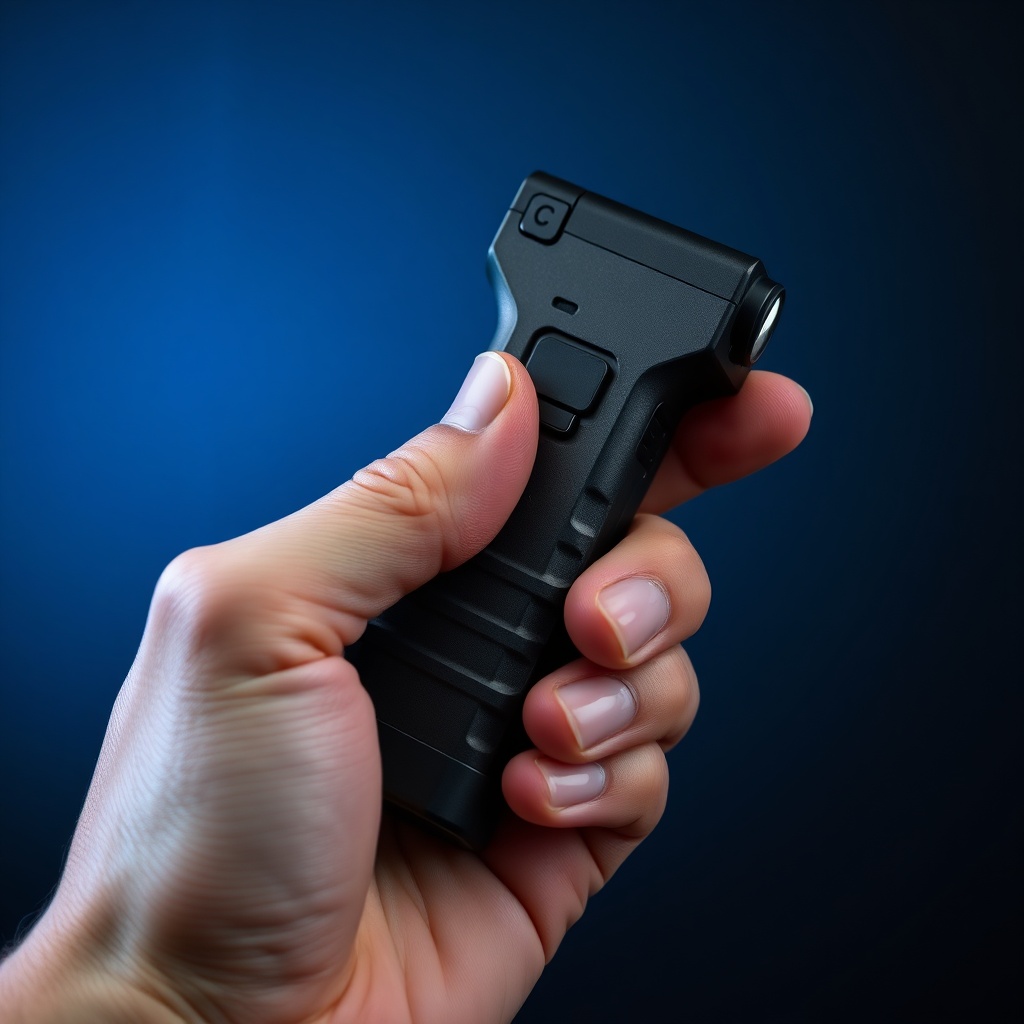
A detailed product shot showcasing the design and features of a high-quality stun gun, emphasizing its practicality for personal safety.
Quick Answer: The best stun gun for personal safety is one that combines sufficient microcoulomb output for reliable muscle disruption, a safety mechanism you can disengage under stress, and a form factor you can carry consistently. There is no single "best" model; the ideal choice depends on your hand size, carry method, and local laws.
Defining "Best" in the Context of Personal Safety
"Best" is subjective when it comes to personal protection. A compact keychain model that is perfect for a small purse becomes useless for home defense. A full-size tactical unit with maximum power is impractical for daily pocket carry. Therefore, the best stun gun is the one that meets your specific needs while satisfying four core criteria: reliability, stopping power, ergonomics, and safety features.
Reliability means the device charges properly, holds its charge, and fires when you need it. Stopping power is determined by the electrical output, which we will cover in depth below. Ergonomics refers to how well the device fits your hand and how easy it is to grip under stress. Safety features prevent accidental discharge while allowing quick deployment.
A relatable lifestyle image showing a person using a stun gun as a practical self-defense companion during evening commutes.
The Top Contenders (Based on Core Criteria)
Since specific brands and models are not evaluated here, it is more useful to consider the categories of stun guns that excel in different scenarios.
| Form Factor | Pros | Cons | Ideal User |
|---|---|---|---|
| Compact / Keychain | Highly portable, easy to conceal, lightweight | Lower power output, smaller grip | Those who carry in a purse or pocket and prioritize portability |
| Full-Size / Tactical | Maximum power, better grip, often includes a flashlight | Bulky, may be difficult to conceal | Home defense or open carry where legal |
| Multi-Function / Hybrid | Versatile, combines tools like a flashlight or alarm | More complex to operate, may compromise individual effectiveness | Those who want a single device for multiple uses |
How to Use This Guide
The following sections break down each criterion in detail. Understanding these factors will help you evaluate any self-defense tool you consider. Whether you are looking for a concealed carry stun gun or a home defense device, the principles remain the same.
Understanding Stun Gun Power: Voltage vs. Amperage vs. Microcoulombs
Definition: Microcoulombs (µC) is a unit of electrical charge. It is a more accurate measure of a stun gun's stopping power than voltage alone, as it accounts for the total charge delivered to the target.
The Voltage Myth
Many manufacturers advertise high voltage numbers—often in the millions—as a marketing gimmick. High voltage alone does not guarantee effectiveness. Voltage determines the ability of the electrical current to penetrate clothing and skin, but it is the amperage that causes muscle contractions and involuntary muscle disruption.
A stun gun needs enough amperage to override the body's natural electrical signals. Without sufficient amperage, a high-voltage device may produce a loud, intimidating spark but fail to incapacitate an attacker. When comparing models, look past the voltage figure and focus on the amperage and microcoulomb ratings.
Microcoulombs: The Real Measure of Stopping Power
Microcoulombs represent the total charge delivered during a discharge. This metric is more reliable for comparing stun guns because it accounts for both the voltage and the duration of the shock. A higher microcoulomb rating generally indicates a more effective device.
When shopping, look for the microcoulomb rating in the product specifications. If a manufacturer only lists voltage, be cautious. The absence of a microcoulomb rating may indicate that the device does not deliver a sufficient charge for reliable self-defense.
Power Output and Real-World Effectiveness
Power interacts directly with contact time and placement. A stun gun must make direct contact with the attacker's body, ideally on a large muscle group like the torso or thigh. Holding the device in contact for several seconds is more effective than a quick tap.
To understand your device's power output, you can test it safely. Here is a basic method:
- Ensure the stun gun is fully charged.
- Locate a safe, open area away from flammable materials and other people.
- Activate the safety switch to the "off" position (armed).
- Press the test or trigger button to activate the device.
- Observe the spark or arc between the prongs and listen to the sound.
This test confirms the device is functioning but does not measure its effectiveness on a human target. The spark and sound are also deterrents; the visible arc and crackling noise can scare off an attacker before contact is made.
Key Features to Look For: Beyond the Spark
Ergonomics and Grip
A comfortable, non-slip grip is essential. During an adrenaline rush, your hands may be sweaty or shaking. A stun gun with a textured or rubberized grip will be easier to hold onto and control. The grip shape also affects your ability to maintain a firm hold and aim the device at the attacker's torso.
For those with smaller hands, a compact model with a shorter grip is easier to manage. A full-size model with a long grip may be difficult to hold securely for some users. When possible, hold the device in your hand before purchasing to assess the fit.
Safety Mechanisms and Accidental Discharge Prevention
Stun guns use different types of safety switches: slide, toggle, or squeeze. A slide or toggle switch is common and simple to use. A squeeze-to-activate design requires you to grip the device firmly, which prevents accidental discharge when it is in a bag or pocket.
The trade-off is ease of use under stress. A slide switch requires a deliberate action to disarm the safety. A squeeze grip is intuitive—you simply hold the device tighter to activate it. Choose the mechanism you can operate reliably when nervous. A safety that is too difficult to disengage can render the device useless in an emergency.
Additional Utility: Flashlights, Alarms, and Holsters
A built-in LED flashlight serves two purposes. It can disorient an attacker by shining bright light in their eyes, and it provides illumination in low-light situations, helping you identify a threat. Many full-size stun guns include a flashlight, while compact models may not.
A loud personal alarm can be a significant deterrent. The sound draws attention and may scare off an attacker who does not want to be noticed. Some stun guns combine a stun feature with a separate alarm function.
A holster is essential for secure carry. A stun gun loose in a bag can accidentally activate (if the safety is off) or be difficult to find in an emergency. A holster keeps the device in a consistent, accessible position. Look for a holster that fits your carry method, whether that is a belt clip, a purse attachment, or a pocket sleeve.
Form Factor and Carry Options: Matching the Device to Your Lifestyle
Compact and Keychain Models
Compact and keychain stun guns are the most popular choice for everyday carry. They are small, lightweight, and can be attached to a set of keys or stored in a purse or pocket. Their primary advantage is that you are more likely to have it with you when you need it.
The trade-off is power. Compact models typically have lower microcoulomb ratings than full-size units. They also have smaller grips, which can be a challenge for users with larger hands. For many, the portability outweighs the reduction in power.
Full-Size and Tactical Models
Full-size and tactical stun guns prioritize power and grip. They are larger, heavier, and often include a flashlight. These models are best for home defense or open carry where the device can be worn on a belt or carried in a bag without concern for concealment.
Their larger size provides a more secure grip and a higher power output. The downside is that they are difficult to conceal and may be too large for a small purse or pocket. They are not ideal for daily carry in a business or social setting where discretion is important.
Multi-Function and Hybrid Devices
Multi-function devices combine a stun gun with other tools, such as a flashlight, a baton, or pepper spray. These hybrid devices offer versatility and can be useful for those who want a single device for multiple purposes.
However, they may compromise on individual effectiveness. A device that combines a stun gun with a baton may be heavier and more difficult to deploy quickly. A combination with pepper spray requires you to choose which mode to use under stress. If versatility is important, consider whether the added complexity is worth the trade-off.
Legal Considerations and Responsible Ownership
Quick Answer: Stun gun laws vary significantly by state and locality. Some states require a permit or license to purchase or carry a stun gun, while others prohibit them entirely. Always research your local regulations before buying.
State and Local Laws
The legality of stun guns is not uniform across the United States. Some states treat them like firearms and require a permit. Others restrict certain features, such as the ability to disguise the device as another object. Some localities have their own ordinances that are stricter than state law.
Before purchasing, research the laws in your state and city. Check the official state government website or consult a legal professional if you are unsure. Owning a stun gun in a jurisdiction where it is prohibited can result in criminal charges.
Training and Practice
Regular practice is essential for building muscle memory. In an emergency, you will not have time to think about how to operate your device. Practice until unholstering, disengaging the safety, and assuming a defensive stance become automatic.
A basic training routine can be performed at home:
- Unholster the stun gun safely, keeping your finger off the trigger.
- Activate the safety switch to the "off" (armed) position.
- Assume a defensive stance with your feet shoulder-width apart.
- Aim at the attacker's torso, not the head or arms.
- Deploy the stun gun and maintain contact for 3-5 seconds.
- Re-holster and secure the device.
Practice this routine regularly until it feels natural. You can also practice drawing from a bag or purse if that is your carry method.
Maintenance and Battery Care
Proper maintenance ensures your stun gun works when you need it. Most modern stun guns are rechargeable, which is more convenient and cost-effective than disposable batteries. Charge the device according to the manufacturer's instructions, typically after each use or monthly.
Store the stun gun in a cool, dry place away from extreme heat or cold. Do not leave it in a hot car, as this can damage the battery. Check the charge level periodically and recharge as needed. A stun gun with a dead battery is just a heavy piece of plastic.
Frequently Asked Questions (FAQ)
What is the difference between a stun gun and a taser?
A stun gun requires direct contact with the attacker's body to deliver an electrical shock. A taser shoots two prongs connected by wires that deliver the shock from a distance. Tasers are generally more expensive and may be subject to stricter regulations.
How long does a stun gun charge last?
The charge duration depends on the model and the battery capacity. Most stun guns can provide a few minutes of continuous discharge before the battery is depleted. However, you should charge the device regularly to ensure it is ready when needed.
Can a stun gun be used on someone who is wet?
Water can conduct electricity, so the effect may be somewhat reduced, but a stun gun is generally still effective on a wet target. The water may spread the charge, but the muscle disruption is likely to still occur. The most important factor is maintaining direct contact.
Are stun guns legal to carry in all states?
No, stun gun laws vary significantly by state. Some states allow open and concealed carry without a permit, while others require a license or prohibit them entirely. Always check your local laws before purchasing or carrying a stun gun.
How do I choose the right size stun gun for me?
Consider your carry method, hand size, and intended use. If you plan to carry it in a purse or pocket, a compact model is best. If you need maximum power for home defense, a full-size model is appropriate. If you are unsure, start with a compact model that you can carry consistently.
Conclusion
The best stun gun for personal safety is the one you can carry consistently and deploy effectively. Focus on the microcoulomb rating for stopping power, a grip that fits your hand, a safety mechanism you can operate under stress, and a form factor that matches your lifestyle. Remember that legal compliance is non-negotiable—check your local laws before buying.
Training is just as important as the device itself. Practice drawing, arming, and deploying your stun gun until it becomes second nature. Check your local laws, practice regularly, and stay safe.